
How to Host a Trivia Night People Actually Want to Come Back To

A good trivia night isn't really about the questions — most of them, anyway. It's about structure. We've put together question sets for enough home game nights and pub-style events through Mega Brain Puzzle to notice the same handful of decisions separate a trivia night people loved from one that fizzled by round three.
This is the format we'd actually recommend, built from what seems to work consistently rather than a generic checklist.
Decide the Format Before You Pick a Single Question
The biggest mistake is picking questions before deciding how people will answer them. Format changes everything about pacing.
Solo Buzzer-Style vs. Team Rounds
Buzzer-style, first-to-answer play works well for small, competitive groups of 4–6 who already know each other. For anything bigger — or a mixed-age family event — team rounds with written answers keep everyone involved and avoid the same two people dominating every question.
How Many Rounds Is Too Many
Energy drops hard past round five or six. Four to five rounds of eight to ten questions each is the sweet spot for most home and casual pub-style nights — long enough to feel substantial, short enough that nobody checks their phone.
The Question Mix That Keeps a Mixed-Age Crowd Engaged
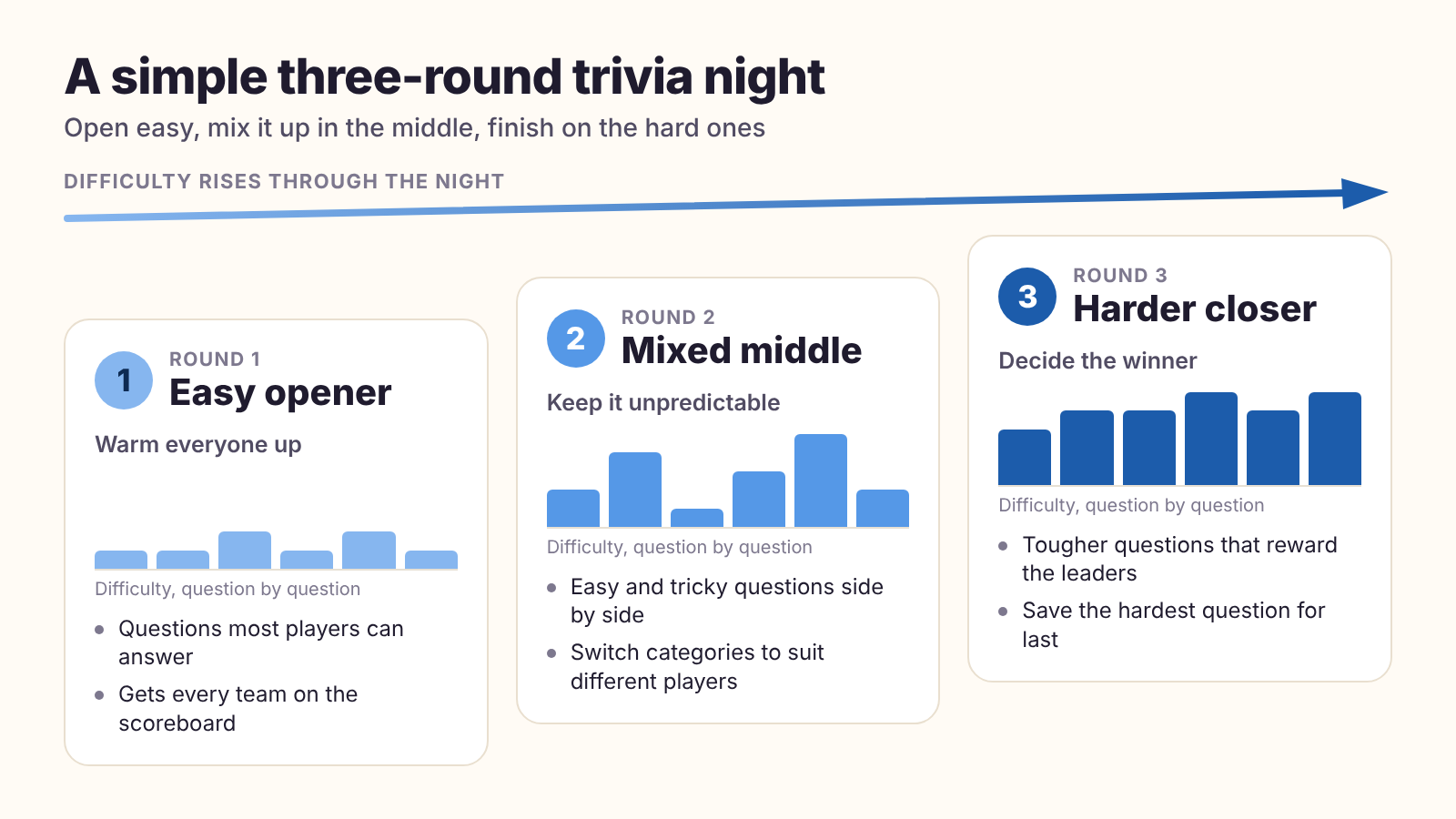
Starting with your hardest round is a common mistake. Open easy, so everyone scores early and stays invested, then build difficulty through the night.
- Round 1 — General knowledge, easy difficulty, builds early confidence.
- Round 2 — Pop culture or movies, usually your most engaged round.
- Round 3 — Geography or history, a bit harder, separates the pack.
- Round 4 — Science or a themed wildcard round, hardest of the night.
- Final round — a short lightning round or a tiebreaker if scores are close.
Mixing categories this way matters more with a mixed-age or mixed-knowledge crowd than with a group of trivia regulars — it gives everyone at least one round where they're genuinely competitive.
Scoring Systems That Don't Cause Arguments
More scoring complexity usually means more disputes, not more fun. Keep it simple unless your group specifically wants the complexity.
Simple Point-Per-Question
One point per correct answer, full stop. This avoids 90% of scoring disputes and is the right default for most nights.
Wager Rounds (Use Sparingly)
Letting teams wager points on one question per round adds drama, but more than one wager round per night tends to overcomplicate scoring faster than it adds fun.
Set Your Tiebreaker Rule Before You Start
Decide the tiebreaker format (usually a single closest-number-wins question, like a population or year estimate) before the night starts, not after you already have a tie. Announcing it upfront heads off the one argument every trivia night risks ending on.
What to Do When Someone Disputes an Answer
This will happen eventually, usually over a technicality (a slightly different phrasing, an alternate correct answer, a questionable spelling). Decide in advance that the host's printed answer key is final for the night — litigating it mid-round kills momentum far more than the odd debatable point is worth.
- If a question genuinely has two defensible answers, award the point to anyone who gave either one rather than relitigating it on the spot.
- Keep a short "protest log" on paper instead of arguing live — revisit it between rounds if it still matters.
- Accept that a couple of questions each night will have minor hiccups. The goal is a fun night, not a perfectly litigated one.
Group Size and Themes — Two Variables Worth Planning For
Format advice above assumes a mid-size group. Both ends of the size range need small adjustments.
- Small groups (4–6 people): skip teams entirely and play individually — team rounds start feeling pointless below about 6–8 people.
- Large groups (15+): teams become necessary just for pacing, and you'll want a louder, more structured scorekeeping system like a shared whiteboard everyone can see.
- Themed nights (movies, 90s nostalgia, a specific decade) work well as one wildcard round rather than the whole night — a full night of one narrow theme tends to exclude whoever doesn't know that topic well.
Running It Smoothly on the Night
A handful of logistics decide whether the night runs itself or needs constant refereeing.
- Print physical answer sheets per team rather than relying on shouted answers.
- Appoint one scorekeeper who isn't playing, if your group is big enough to spare someone.
- Set a visible timer per question (a phone timer on the table works fine) so one team can't stall.
- Read each question twice before starting the clock — it avoids mishearing disputes later.
- Reveal answers after each round, not just at the end, so people stay engaged round to round.
That last point matters more than it sounds like it should. Waiting until the very end to reveal any answers means low-scoring teams mentally check out by round three, since they have no idea if they're actually in it until the final tally.
Hosting a Trivia Night Over Video Call
The same structure holds for a remote trivia night — the main changes are logistical. Share your screen for questions instead of reading them aloud, have each team submit answers in a private chat thread or a shared form instead of shouting them out, and build in a few extra seconds per question since remote audio lags slightly behind an in-person read.
Do You Need Prizes?
No, but a small prize changes the energy in the room more than its actual value would suggest. For a home game night, bragging rights plus something silly (a trophy, loser picks the next takeout order) is enough.
- Home game night: a joke trophy or a "loser does the dishes" stake works better than anything expensive — the stakes should match the vibe, not escalate it.
- Pub-style or larger events: a modest prize per round winner, plus a bigger one for the overall winner, keeps teams who fall behind early still motivated to win individual rounds.
- Skip cash prizes for casual nights — they tend to shift the mood from playful to competitive in a way that works against the "come back next time" goal.
Where to Get Your Questions
You can build a full night's question set directly from our categories, which already come organized by difficulty and topic — useful for building the easy-to-hard round structure above without writing questions from scratch.
- Browse all categories to build a themed round.
- Pull a printable sheet per round so you're not reading off a phone screen.
- Use our General Knowledge quiz for a reliable easy opening round.
- Check Daily Trivia if you want a ready-made set with zero prep.
Bottom Line
The questions matter less than the structure around them: open easy, keep scoring simple, decide your tiebreaker before you need it, and cap the night at four or five rounds. Get that right and the question set almost takes care of itself.
Put This Into Practice
Frequently Asked Questions
How many questions should a trivia night have?
What's a good trivia round order?
How do I handle ties in a trivia night?
More From the Blog
Do Brain Games Actually Improve Memory? Here's What the Research Says
Brain training apps promise sharper memory and a smarter you. Here's what the research actually supports — and what it doesn't.
Free Printable Trivia for Classrooms: A Teacher's Guide by Grade Level
After watching how teachers actually use printable trivia sheets, here's what works by grade level — and the formats worth stealing.
Screen Time You Don't Have to Feel Guilty About: Picking Educational Games for Kids
Not all screen time is equal. Here's how to tell an educational game from a time-filler, and which formats are actually worth your kid's attention by age.